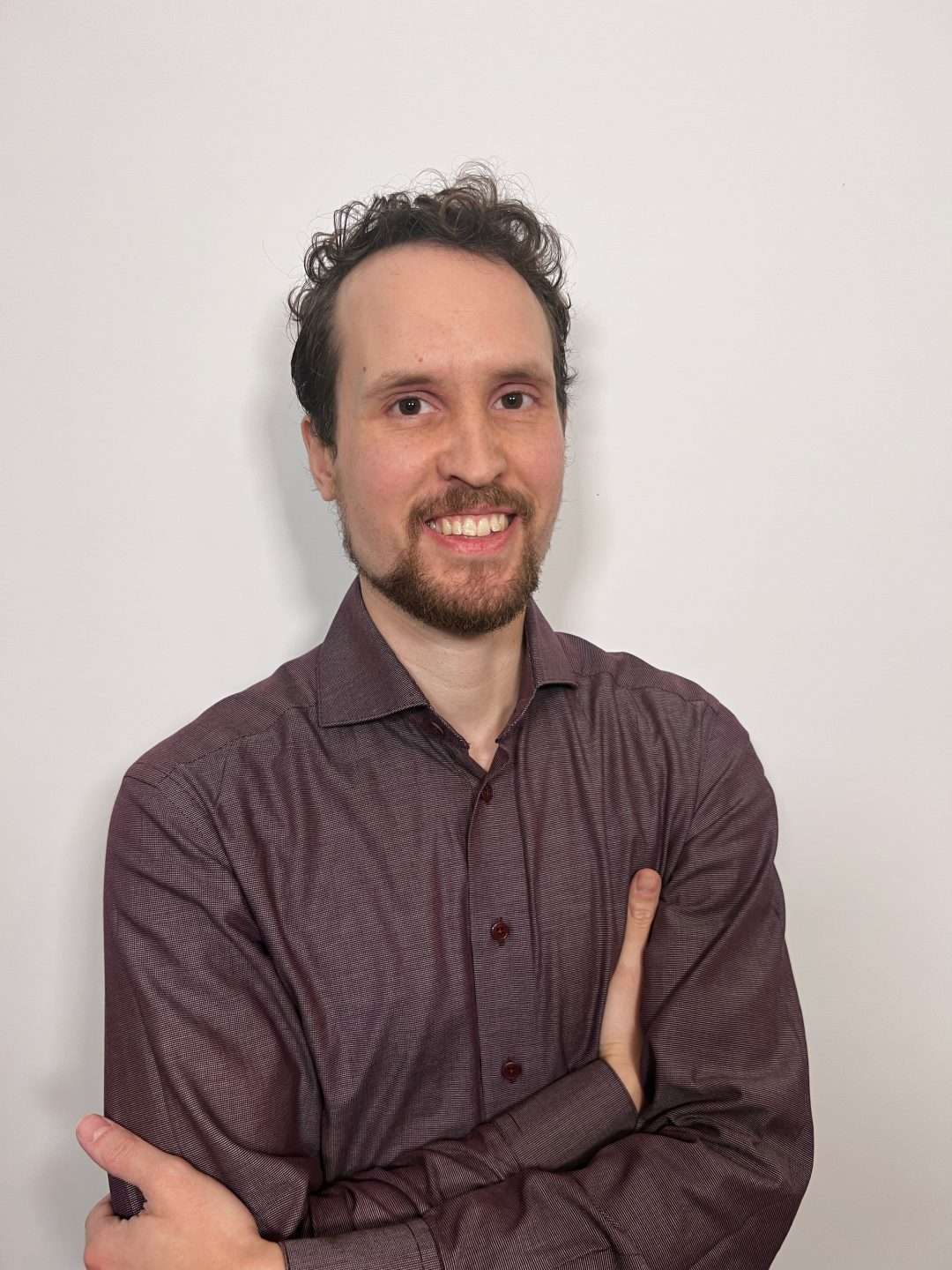
Simon Maebe
Systemic coach · Systemic facilitator · Trainer
Open to new clients, online and in Brussels. Works in English and Dutch.
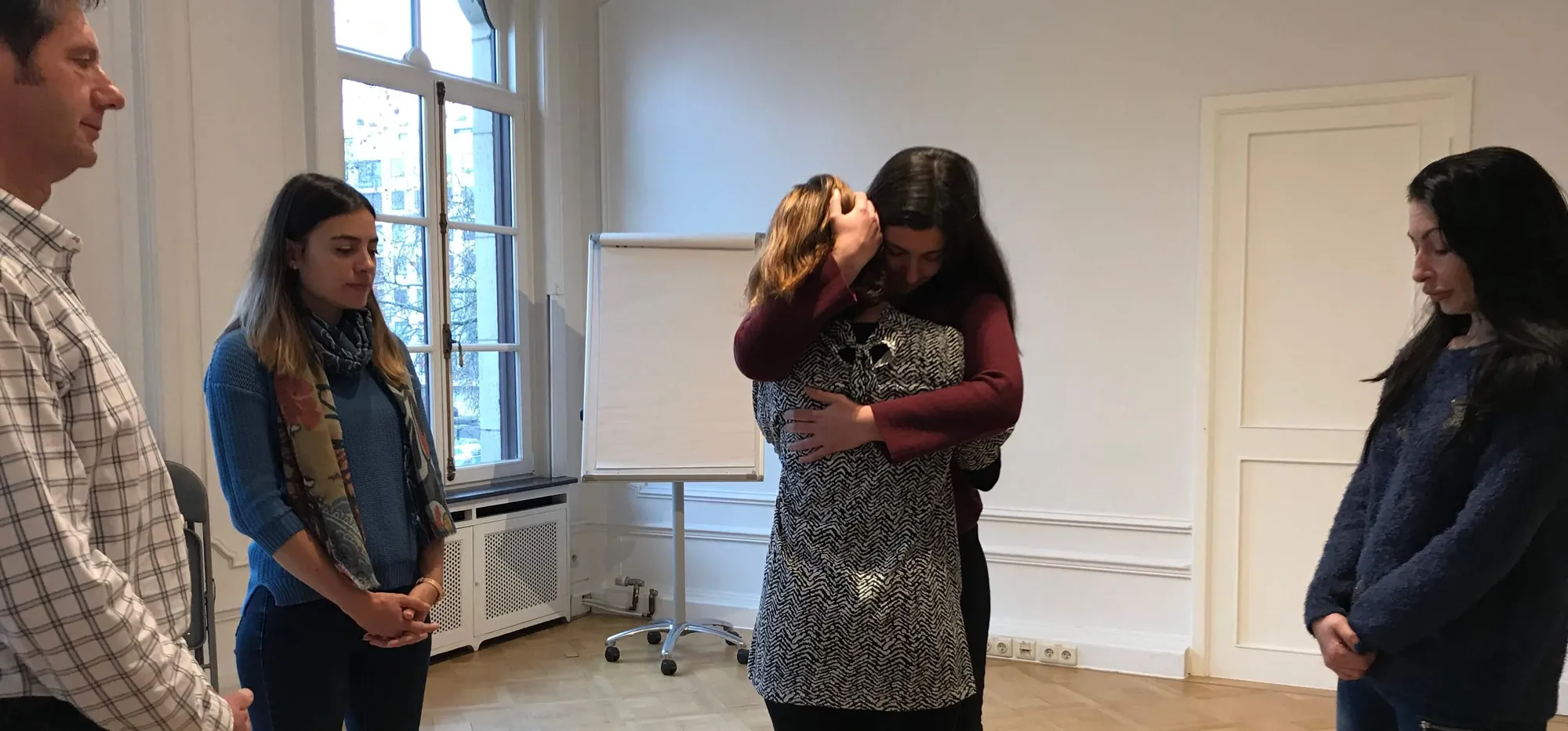
Systemic family work
A constellation places the hidden structure of your family in space so you can see it, feel it, and shift it. The facilitator guides and holds the direction. What you discover reaches further than talking alone.
What it is
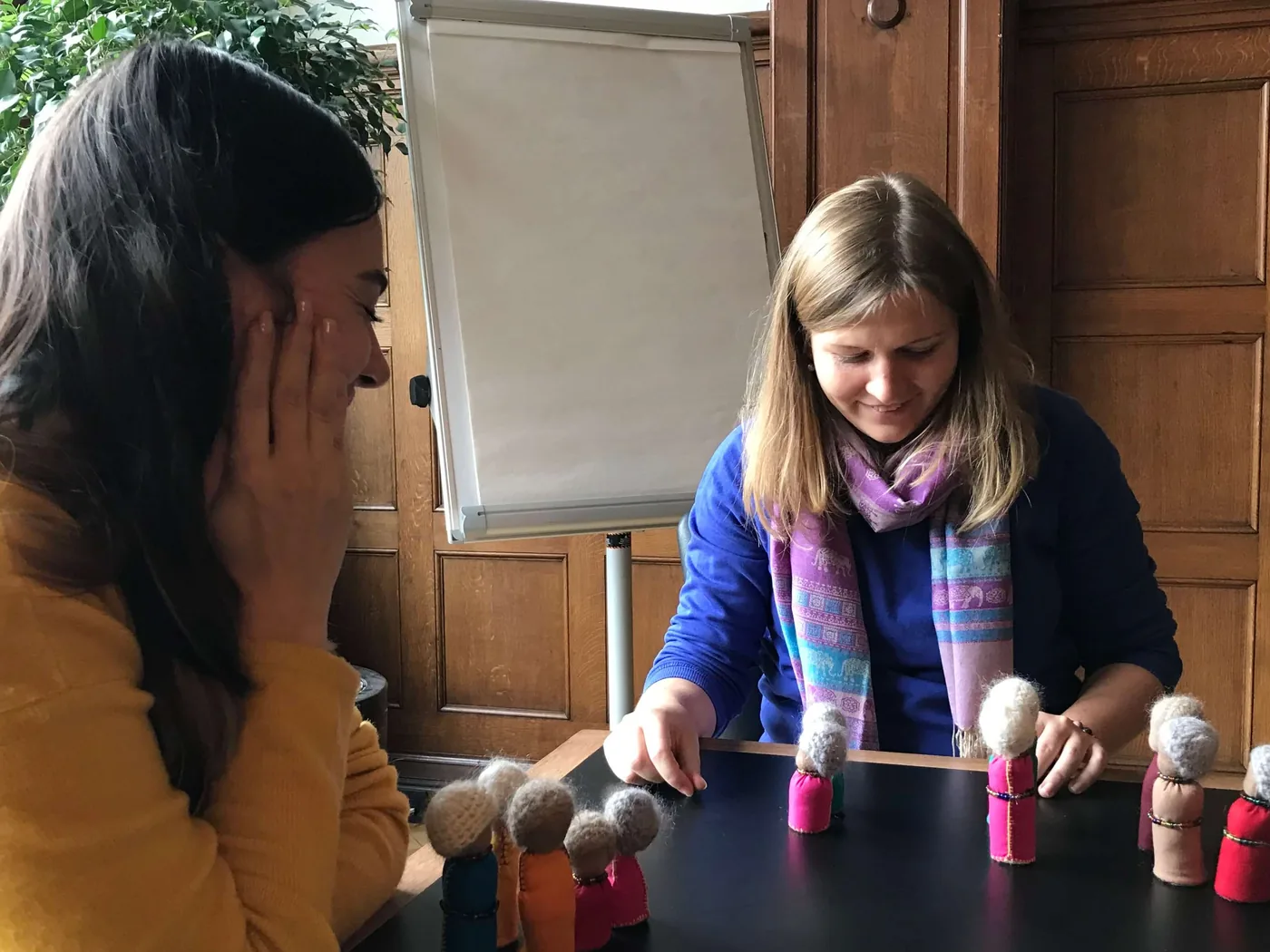
A family constellation is a way of setting your family out in space, using figures you place yourself, so that who stands where and who is turned away becomes visible and workable. The method comes from systemic therapy, where a difficulty is looked at together with the family it sits in, across more than one generation.
You feel the picture as well as see it. When you move one figure closer or turn another away, something shifts in your chest or your shoulders before you have words for it, and that felt change is what the session follows. In a group, the people standing in report the same kind of thing from inside their positions, and those reports are what the work reads.
Much of what you carry reaches back further than your own life. Parents, grandparents, a loss nobody spoke about: these stand in the picture too, and seeing where they stand often leaves you freer to choose your own place.
A family is the system most people come with, and it is not the only one the method reads. The same way of working applies to any system you belong to: a team, an organisation, a project, or the parts of your own inner world that pull in different directions. What is set out in space is a set of relationships, and relationships are not only familial.
What we work on
People arrive with something concrete: a relationship that keeps breaking in the same place, a symptom nobody can explain, a grief that will not settle. Any one of these is enough to start with.
“I keep ending up in the same argument, and I do not know why.”
The same loop with a partner, a parent, a sibling or a child, arriving back in the same place however you approach it. Seeing it from the outside often changes what feels possible inside it.
“There is something we do not talk about, and I feel it anyway.”
A silence, a loss, or a story from further back that still presses on the present. A constellation can put it where you can look at it, rather than only sense it.
“I am anxious, or low, and not quite myself.”
A state that has outlasted any obvious reason for it, and does not answer to understanding it. You can bring it exactly as it is, without knowing where it comes from.
“There is a pain, or a symptom, and nothing quite moves it.”
A symptom, a persistent pain, or grief that is felt physically. It is the most common way people arrive, and the work belongs alongside medical care rather than in place of it.
“I cannot find my feet.”
A bereavement, a separation, a move, becoming a parent, or a choice you are standing in front of. A constellation can help you find where you stand in it.
“Nothing is wrong exactly, but I want to know what shaped me.”
Curiosity rather than crisis: your roots, your patterns, and what sits in the way of what you want. It is a real and welcome way to arrive.
“Something is off and I cannot say what it is.”
Plenty of people arrive without a category, holding a sense that something is not sitting right. That is enough to start with, and working out what sits under it is what the session is for.
In a session
A session opens with an interview, and the interview is already part of the work. You talk through what you are bringing until the question underneath it comes clear, in your own words rather than in ours. That can take fifteen minutes or the whole session, and a session that is interview only is a complete piece of work.
Then you set the situation out where you can see it: simple figures in a dedicated online constellation space, objects if you are in a room, or nothing at all, held in your mind’s eye. You place the people who belong in the question, and the arrangement usually says something before anyone comments on it.
From there it moves. Your facilitator asks how it feels from where you are standing and where your eyes go, and offers experiments you are free to decline: would you be willing to move closer to her, what happens if you turn and face him. You shape the picture and your facilitator holds the direction and the pace, and it behaves more like a film than a photograph.
The closing is protected rather than squeezed. The last stretch is for grounding: coming back to the room you are in, naming plainly what is still open, and leaving steady. The work keeps settling in the days after, which is often where the quieter shifts arrive.
You can read more about working online, in a dedicated constellation space that has been in use here since 2012.
Who is who
The same four roles appear whether you are working privately or in a group. In a private session the people in your question are held by figures you place, rather than by people standing in a room.
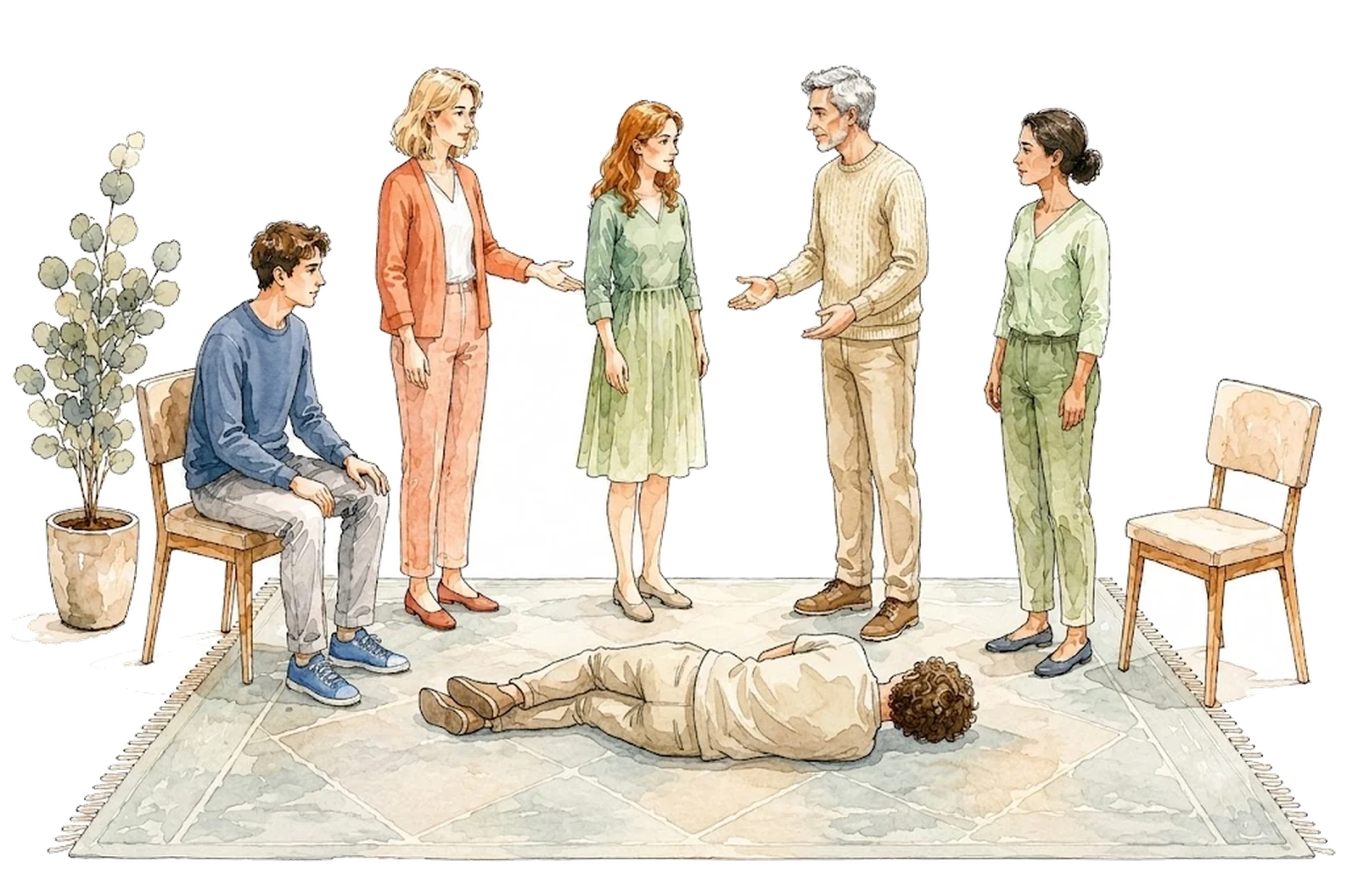
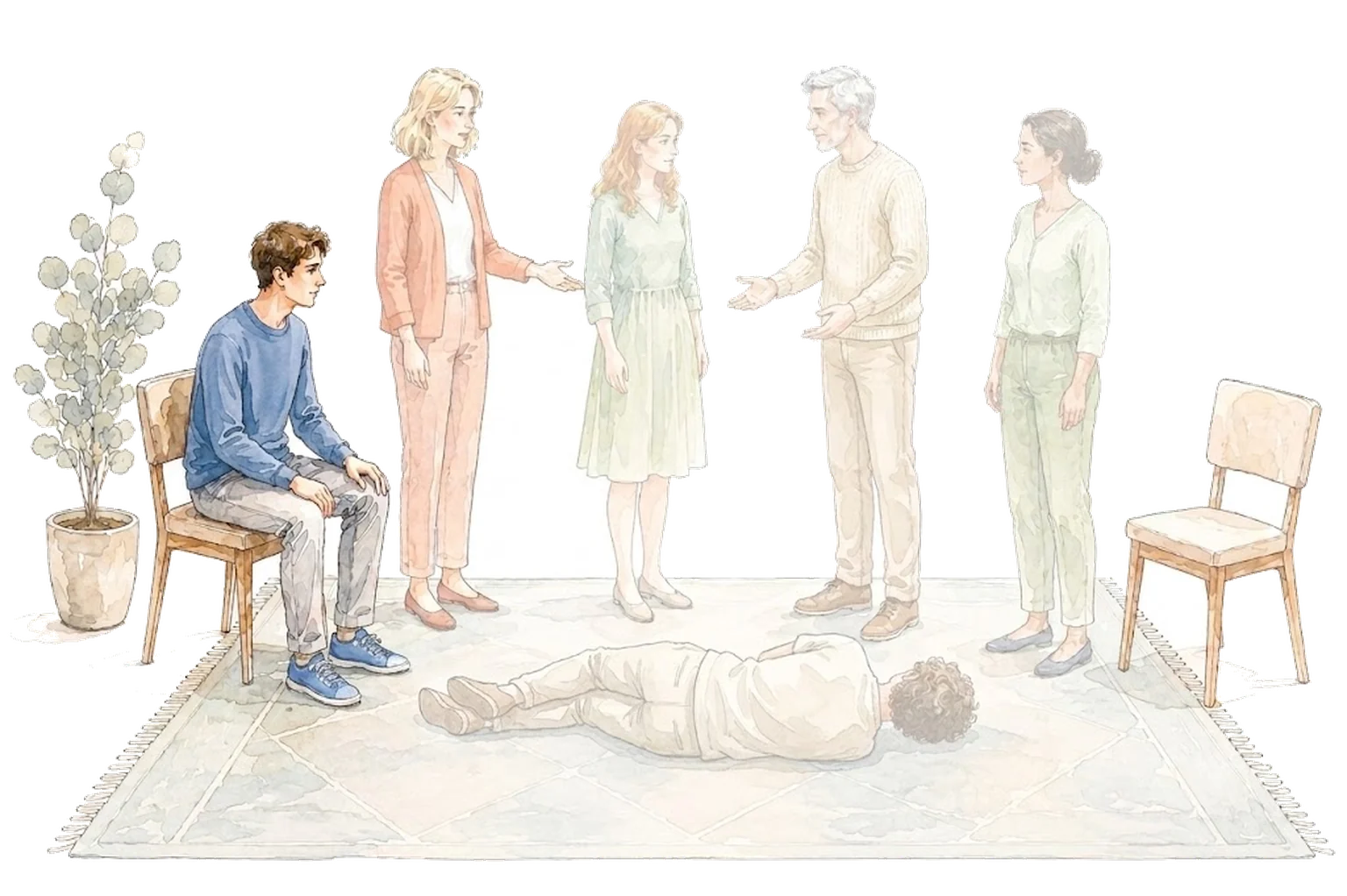
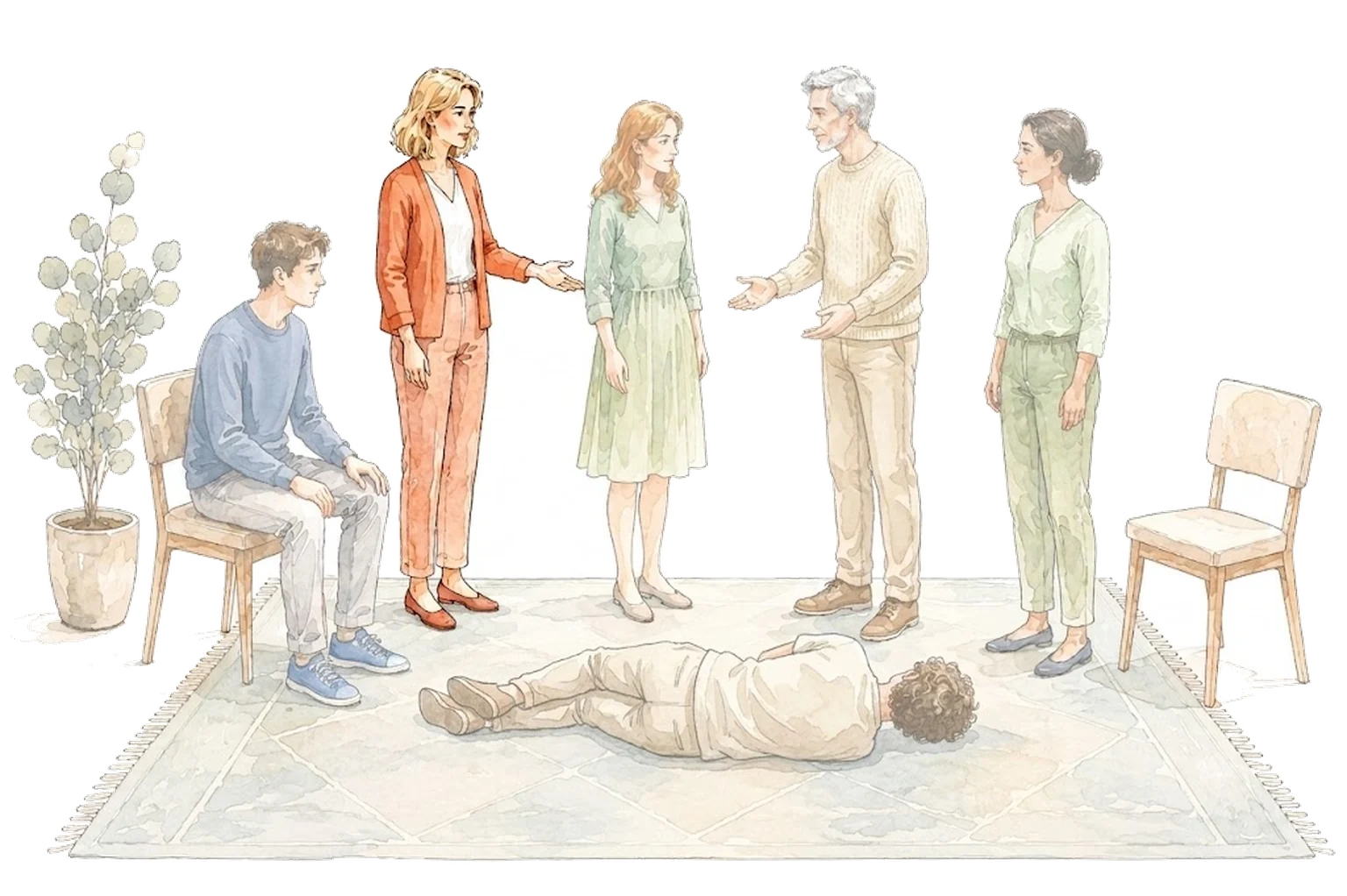
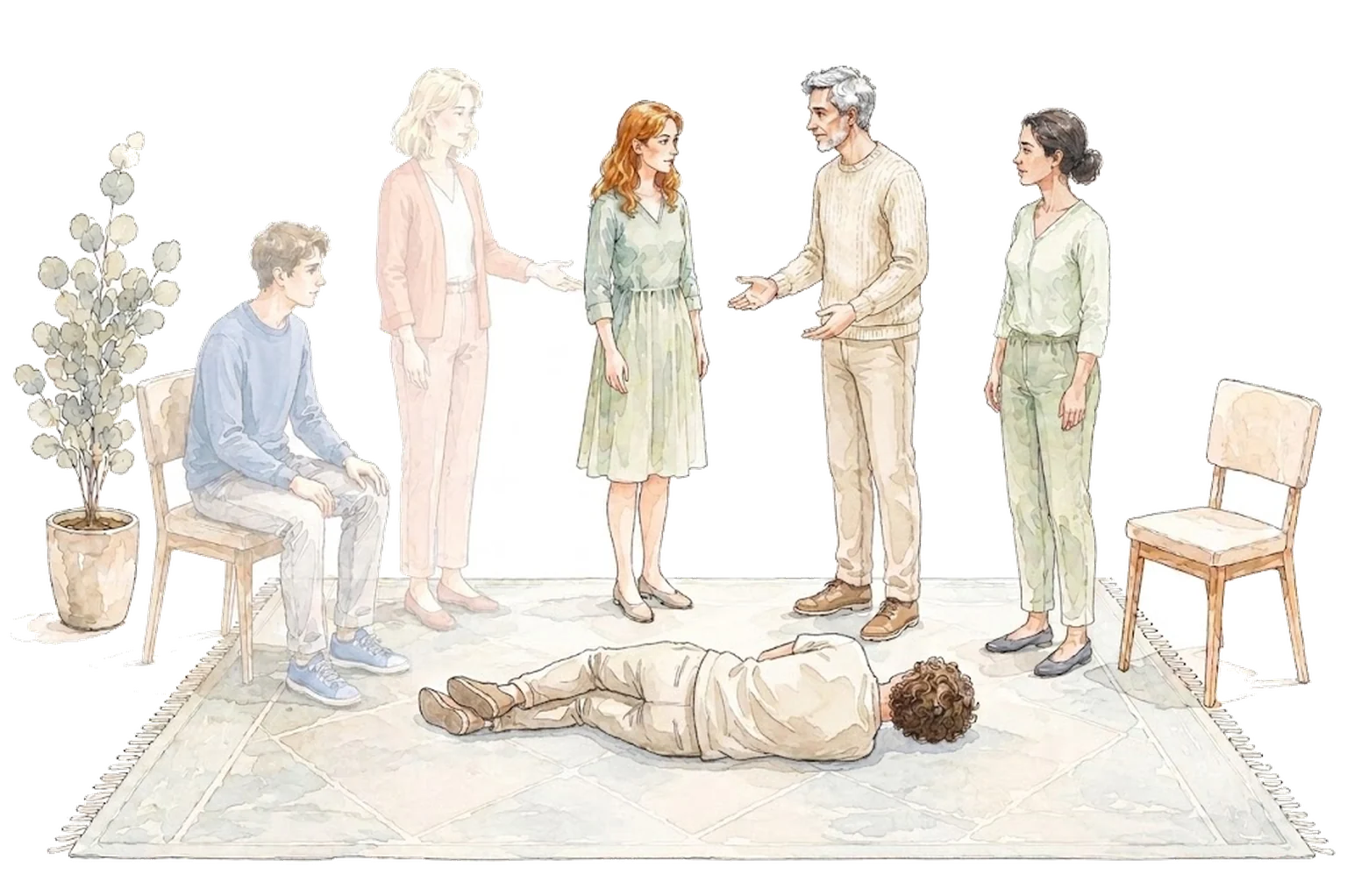
A constellation set out in a room: one person working on their own question, one holding the process, and the rest standing in for the people the question is about. In a private session the same scene is smaller and quieter, set out on a table or on a screen, with figures where the people are here.
The person whose question it is, and on this page that is you. You set the goal in your own words, you place the people who matter, and you decide how far the session goes. What is asked of you is to notice what you feel from where you stand.
Your facilitator holds the direction and the pace, asks what you notice, and offers experiments you are free to decline. What the picture means stays yours to decide. Most people meet their facilitator for the first time in the session, and the work is built to run that way.
The ones standing in for the people in your question. In a group they are other participants, who report what they feel from inside a position, as sensations, impulses and where their eyes go; in a private session they are simple figures you place. Participants can step out of a role at any moment, and are thanked and released by name at the end.
The two settings
You can work one to one with a facilitator, or in a group where other people stand in for the people in your question. This page describes the private form.
Just you and your facilitator, with the whole session given to your question. You place simple figures or hold the picture in your mind’s eye, and your facilitator keeps you steady in the room you are in while you move through it.
A workshop, where other participants stand in for the people in your question and one person works at a time. Everyone takes a turn across the day, and everyone stands in for someone else.
Either way, the question is yours, the pace is yours, and you set the rhythm.
How we work
Constellation work is held differently in different places, and the name alone does not tell you much. These are the commitments the sessions here run on.
You set the question and the goal in your own words. Everything your facilitator offers is an experiment you can decline, and one that does not work still tells you something.
Before anything is placed, you talk through what you are carrying until a clear question emerges. That conversation does its own work, and it may take a whole session.
A constellation reaches you through your body as well as your mind. When the picture changes you notice it physically, perhaps as a release in the chest or a steadiness in the legs, and that is the change the session follows.
What appears in a constellation is what someone feels from a position in your system, reported plainly as sensation and impulse. It is not a verdict on your family, and you decide what it is worth.
Safety and regulation come before anything is asked of you, and the pace follows what you can take rather than what would be interesting. The aim is enough movement to leave you in a freer place, and the closing is protected so you leave grounded.
If meaning, faith or ancestry matter to you, they belong in the session and we work with them as yours. If they do not, nothing changes, and nothing here asks you to believe anything in advance.
Practitioners
All five teach on the three-year training at EISEC as well as seeing clients, so the way the work is held is shared between them through cooperation. What differs is language, experience and style, and the choice is about who feels right to you.
Systemic coach · Systemic facilitator · Trainer
Open to new clients, online and in Brussels. Works in English and Dutch.
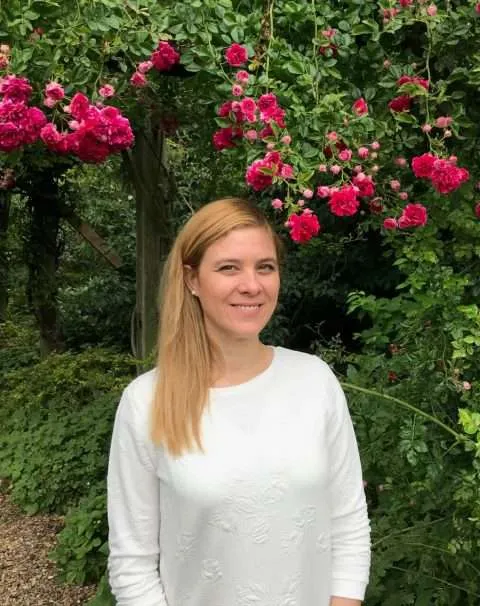
Therapist · Executive coach · Systemic facilitator · Trainer
Available for family constellations and for sound therapy. Cecilia arranges these herself, so it starts with a message rather than a calendar. Her therapy practice has a waiting list. Works in English, Spanish and Portuguese.

Facilitator · Sound therapy provider · Trainer
Away on parental leave, with a waiting list open. Works in English and Romanian.

Systemic facilitator · Trainer
Open to new clients, online and in Brussels. Works in Spanish and English, integrating breath and movement.

Systemic facilitator · Trainer
Open to new clients, online and in Brussels. Works in Portuguese, English, French and Spanish.
Questions
Looking for a different path?
Online anywhere, or in person in Brussels. If you already know which practitioner you want, book with them. If you do not, ask us and we will work it out with you.
See the practitionersScope and safety
Sessions support change in how you live, relate and decide. They sit alongside medical and psychological care, and they do not replace it.
If you are in crisis right now, or you are having thoughts of harming yourself, please turn first to your doctor, to a crisis line where you live, or to the emergency services. If you are being treated for a psychiatric condition, or you have questions about medication, that care belongs with your prescriber, and our work can run alongside it.
If you are unsure where to start, ask us. We will tell you honestly whether this is the right support for you now.
Your cookie preferences
Essential cookies always on
These remember your cookie choice and protect our forms from spam. The site cannot work without them.