Take part
Join the group and stand in for the parts of other people’s systems. Nothing to prepare, and the least you can arrive with is yourself.
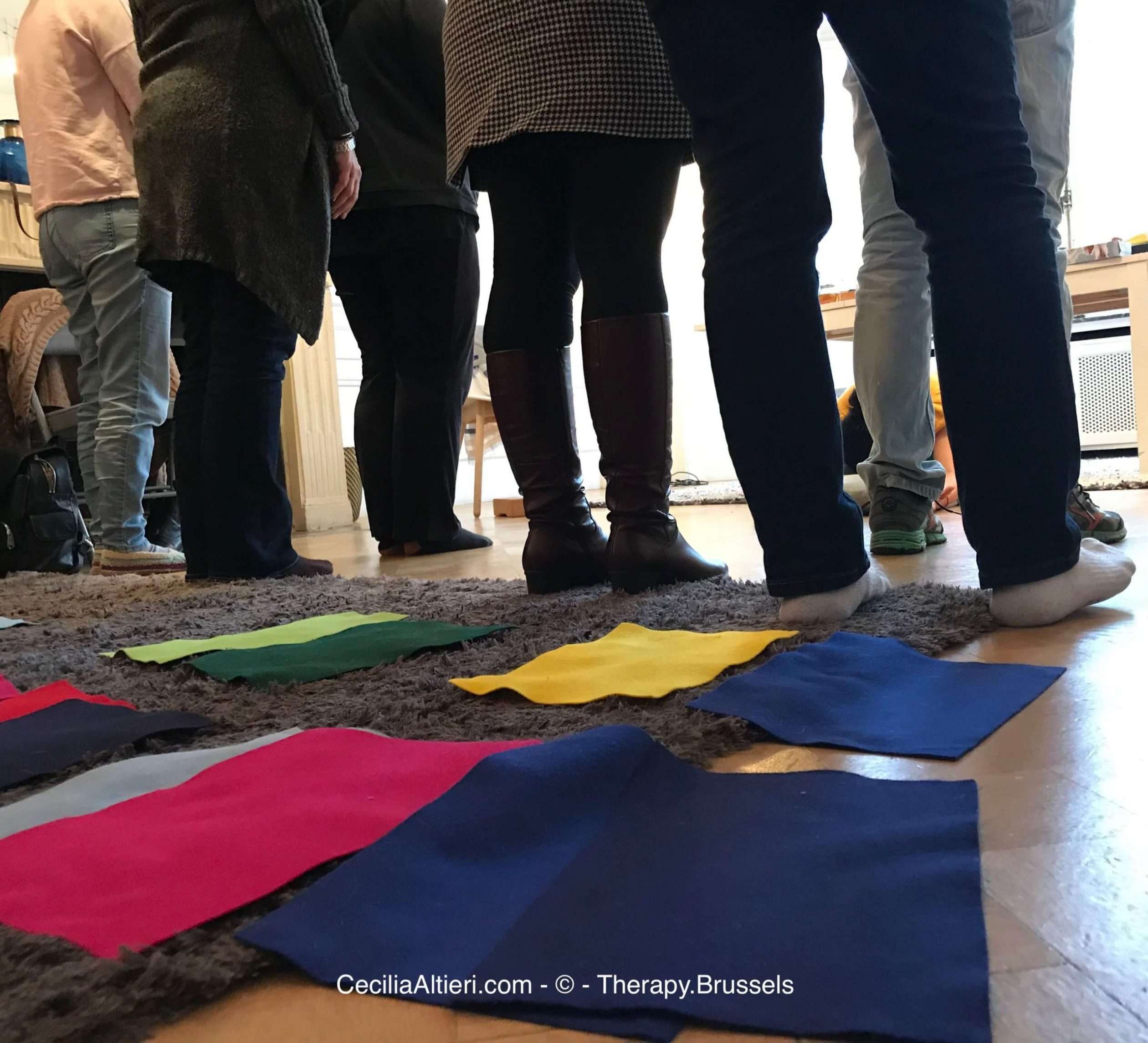
Family constellation workshops
Experiential systemic workshops. A difficulty you carry is set up in the room, with people standing in for the parts of your system, so you can see what holds it in place and what lets it move. Online every month, in Brussels through the year.
Next participation spot
19 to 20 September
The Brussels weekend · null. Come and take part, without bringing a question of your own.
Take a placeNext constellation spot
19 to 20 September
The Brussels weekend · €260. Bring your own question and set it up. Places are limited.
Bring a constellationWhat happens in a workshop
A workshop is a group of people working one at a time. One person brings a difficulty, the rest of the group stands in for the parts of it, and the picture that forms is read slowly and gently set right. Then the group turns to the next person. You take part in every piece of work, whether or not you bring one of your own, and you leave having felt far more than the hours would suggest.
It is experiential learning and personal-development work, led by trained systemic facilitators, and it sits well alongside clinical care. If you want the method itself, what a constellation is takes it apart properly.
Who is in the room
One scene, four places in it. Everyone takes each of them across a day, which is why a workshop needs a group and a private session does not.
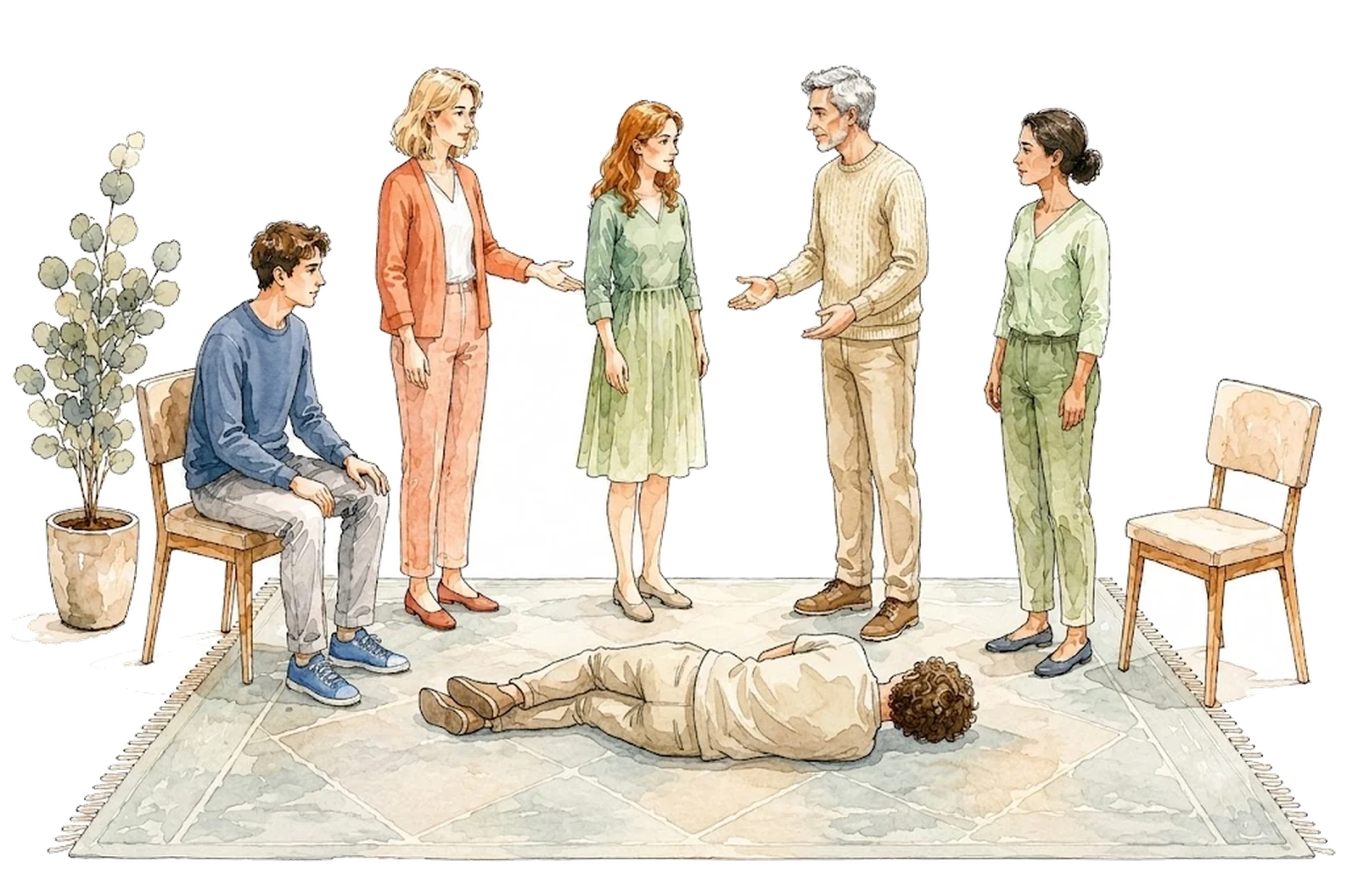
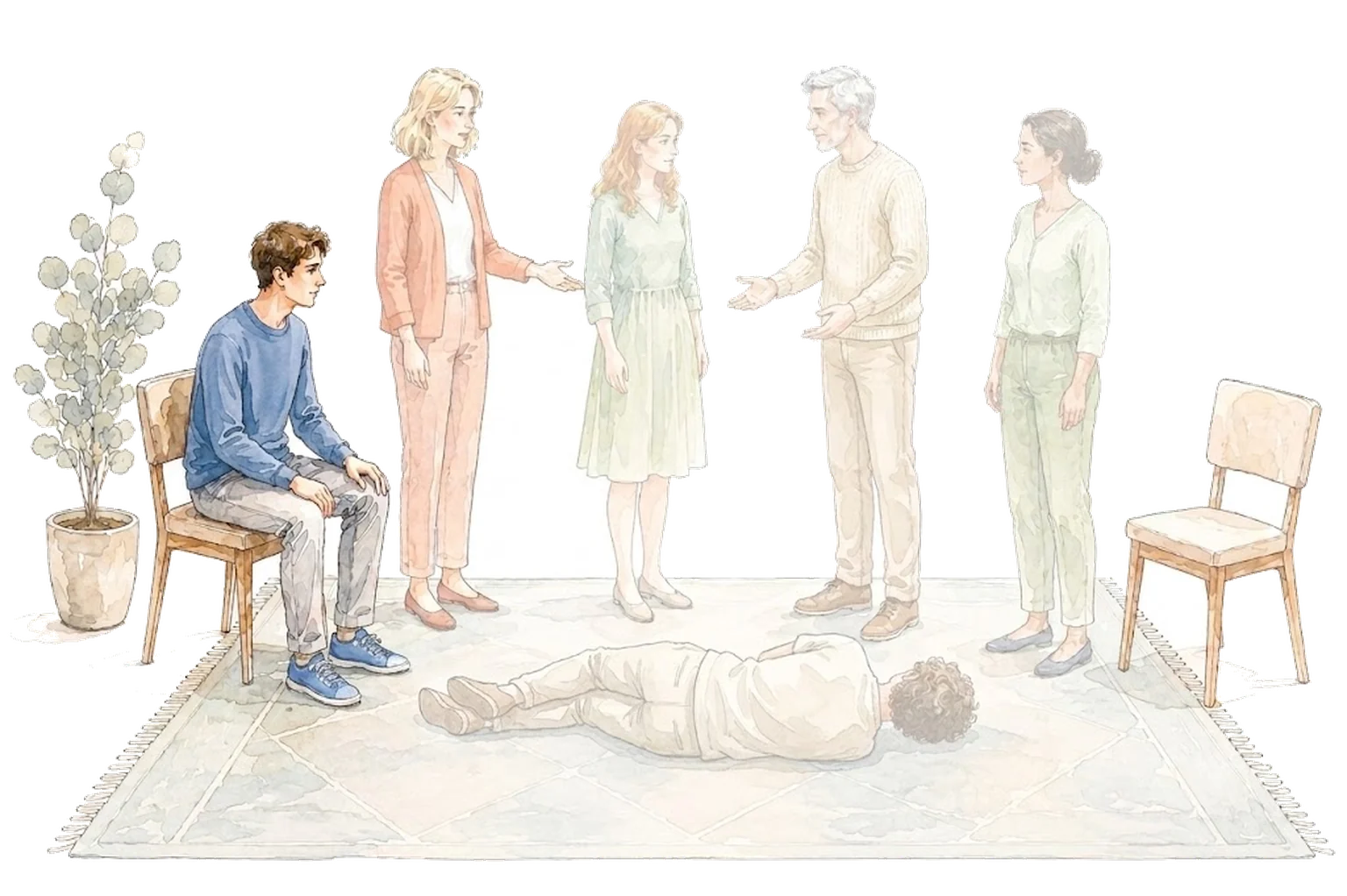
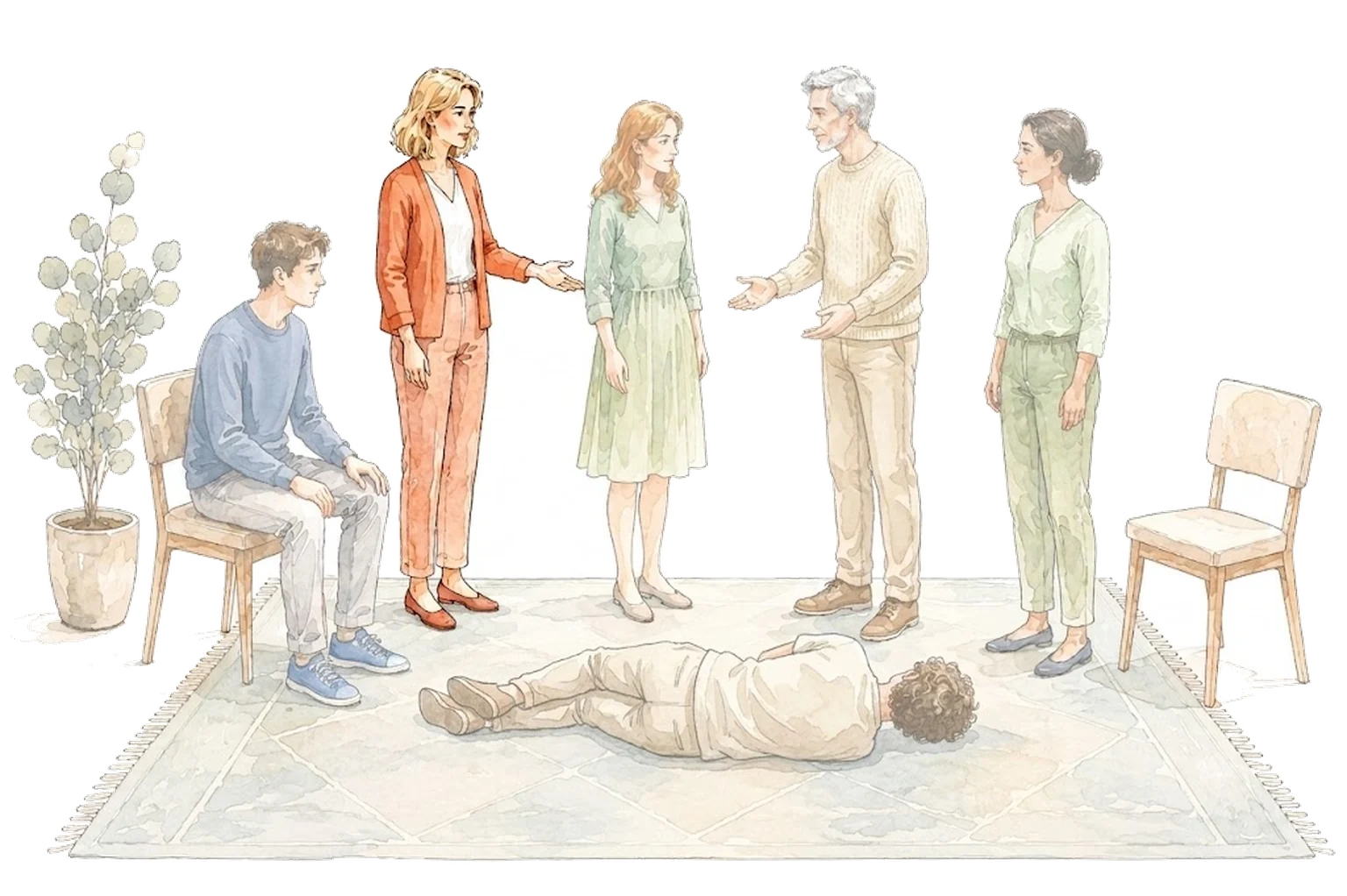
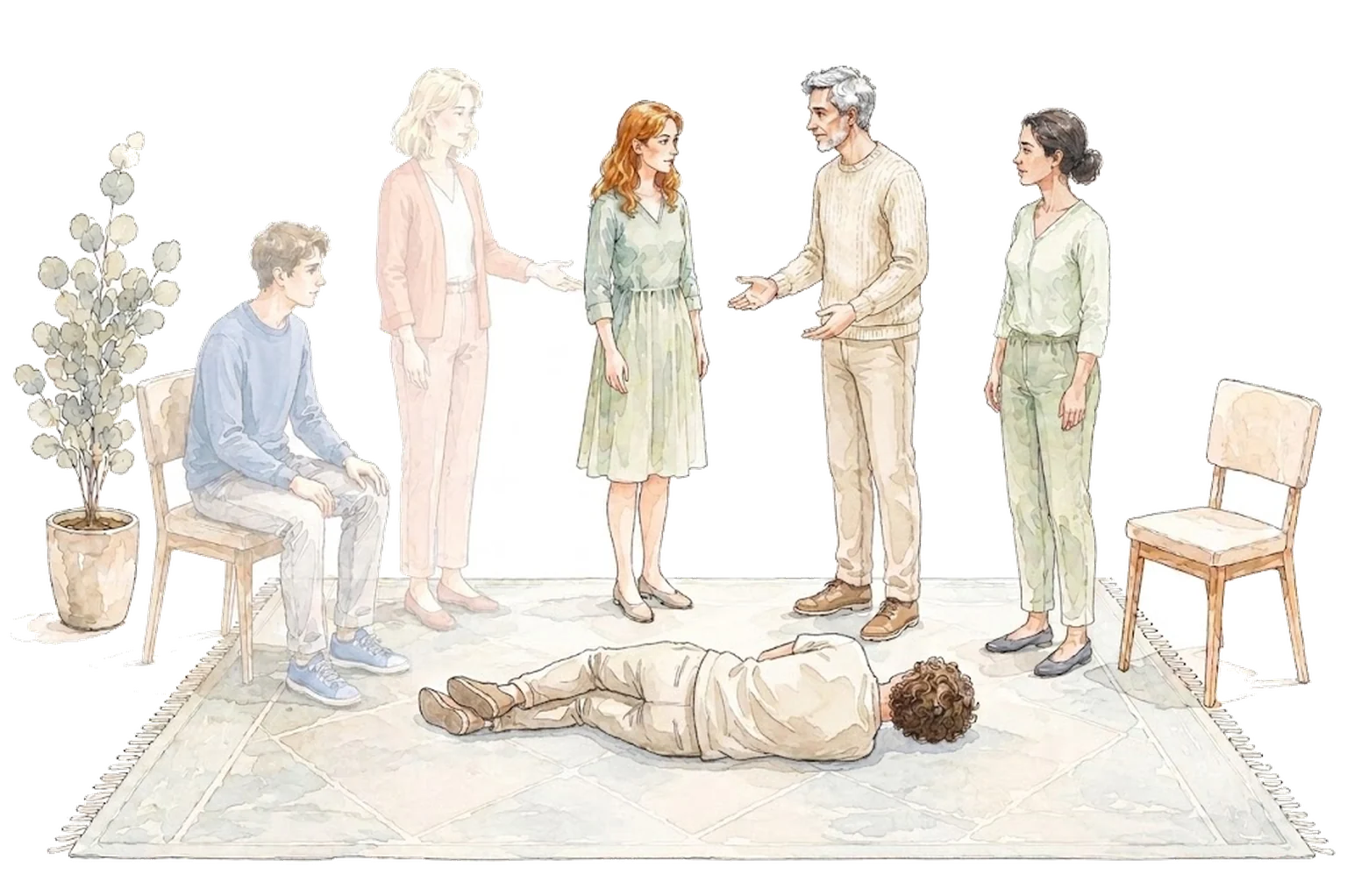
A constellation set out in the room: one person working on their own question, one holding the process, and the rest standing in for the people the question is about. Everyone in the group takes each of these places across a day.
The person whose question it is. You set the goal in your own words, you place the people who matter, and you decide how far the work goes. What is asked of you is to notice what you feel from where you stand.
Holds the direction and the pace, asks what you notice, and offers experiments you are free to decline. What the picture means stays yours to decide. Most people meet their facilitator for the first time on the day.
The other participants, standing in for the people in someone else’s question. They report what they feel from inside a position, as sensations, impulses and where their eyes go. You can step out of a role at any moment, and everyone is thanked and released by name at the end.
If you are taking part
Standing in for someone else is most of what you will do, and it is simpler than it sounds. Nobody asks you to act, to guess, or to know anything about the person.
The person working puts you where they feel you belong, and says who you are standing in for. Then you do nothing on purpose. Let your attention drop into your body and give it a moment. Something usually arrives before you have decided anything.
Where your eyes go. Whether you want to step forward or back. Heavy, light, warm, cold, restless, calm. Say it plainly and in one sentence. You are not interpreting the family and you are not telling them what it means, you are telling them what it is like where you are standing.
Say so if a place is too much, and you will be moved or released. At the end the facilitator names you out of the role, out loud. What you felt belonged to the position, not to you, and people are often surprised how completely it lifts.
You do not need experience and you cannot get it wrong. A representative who says I feel nothing much has said something true and useful, and the facilitator will work with it.
Two ways to take part
Every workshop has two kinds of place. Both are full ways to take part, and most people begin with the first.
You join the group, stand in for people in other participants’ constellations, and take the work in through your own body. No question of your own required.
Everything above, and your own difficulty set up in the room and worked through with the facilitator beside you.
Neither is the lesser one. Taking part is how most people meet the work, and standing in for someone else's system is often where the strongest shift of the day happens to you. Bring a question when you have one that is ready.
Choose your workshop
The same work, different depth and setting.
Monthly
A four-hour session over video, from wherever you are, at a set Brussels-time hour.
From null, or €155 with your own constellation.
Through the year
Two days in the room together, the fuller, slower version of the work.
From null, or €260 with your own constellation.
Once a year
Four days, a facilitator team, trauma-informed throughout. Each edition takes one theme deep.
From €549.
Very powerful workshop. Helped me heal my family's beliefs about money that were sabotaging my relationship with money. To do Family Constellation with Cecilia for me has been a great experience.
The format
1
Bring a question or a difficulty that is alive for you. You do not need to explain your whole history, or know anything about the method first.
2
Sit with the work as a participant, or set up your own constellation and work directly with what is yours. Both are full ways to take part.
3
Representatives take their places. We read what the arrangement shows, slowly, and move only with your consent. You can decline any role, and stop your own work at any point.
4
One small, careful change in the picture, and time to let it land in the body. We close gently.
Looking for a different path?
If you are in crisis right now, or you are having thoughts of harming yourself, please turn first to your doctor, to a crisis line where you live, or to the emergency services.
Your cookie preferences
Essential cookies always on
These remember your cookie choice and protect our forms from spam. The site cannot work without them.